
Getting paid

Get paid before the container sails

How letters of credit, documentary collections and credit risk fit together, and which one protects an exporter who cannot afford to wait for a buyer's promise.

A shipping document set on a desk beside a magnifier and a bank correspondence folder, with a container vessel visible through the window behind

What the handbook helps you get right

Each section walks through one part of an export transaction, from the paperwork to the money landing in your account.

01

Read documents before they cost you

Commercial invoices, packing lists, bills of lading and certificates of origin have to agree with each other and with the letter of credit. The documentation section shows where mismatches usually start and how to check a document set before it goes to the bank.

Export documentation and Incoterms
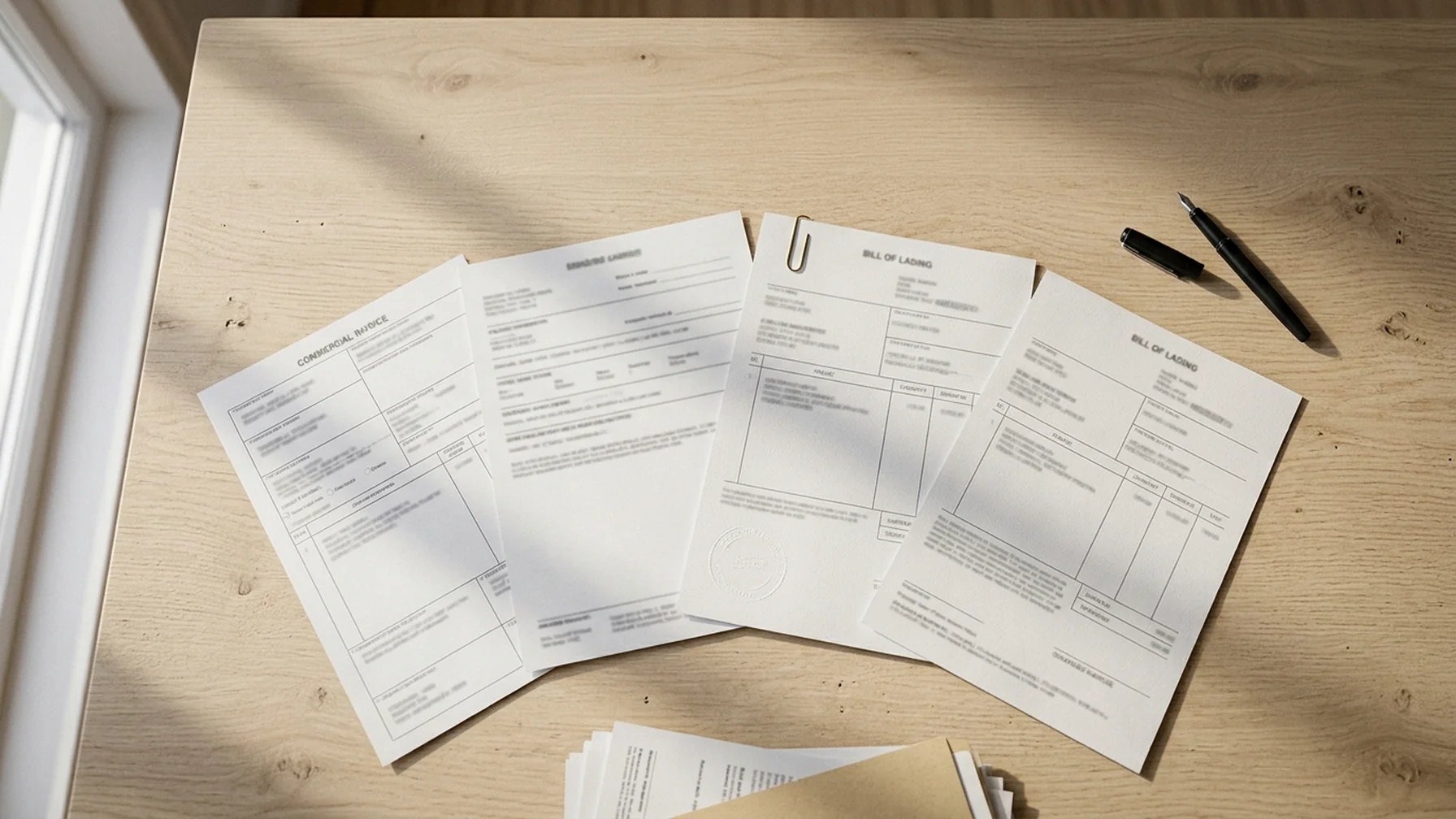
Overhead view of an export document set spread on a wooden desk: commercial invoice, packing list and bill of lading, with a pen and a pair of reading glasses resting on the pages.

02

Know which rules apply before you ship

Export controls and sanctions screening depend on the item, the destination and the end user. The compliance section covers how to classify a product, what a denied-party check involves, and when a license is needed rather than assumed.

Trade compliance and export controls
Close-up of hands sorting a printed product specification sheet next to a laptop showing a classification table, in a small office with daylight from a side window.

03

Choose a payment method you can enforce

Letters of credit, documentary collections and open account terms shift risk in different directions. The getting-paid section compares what each method requires from you, how banks handle discrepancies, and where credit risk sits when the buyer delays.

Letters of credit and credit risk
A bank officer reviewing a letter of credit application across a desk from an exporter, with a document folder and a calculator between them in a bright office.
A desk with a commercial invoice, packing list and bill of lading fanned out beside a shipping carton, a pair of reading glasses resting on the paperwork, daylight from a nearby window.

Export documentation

Documents decide whether you get paid

A commercial invoice that disagrees with the letter of credit is the most common reason a compliant shipment is refused at the bank.

  • Match names, quantities and terms exactly across invoice, packing list and bill of lading
  • Check the letter of credit for required documents before the goods leave
  • Keep a signed copy of every document version you submit
Read the documentation guides

Getting Paid on Export Orders

Three parts of the payment chain that decide whether an export invoice actually turns into cash.

Close-up of a commercial invoice and bill of lading spread on a desk beside a folder of export papers, morning light across the page edges

Documents a Letter of Credit Demands

Banks pay against paper, not against goods. A commercial invoice, packing list, bill of lading and certificate of origin each have to match the credit's wording — shipper name, port names, description of goods, latest shipment date. One mismatched spelling can turn a clean presentation into a discrepancy and delay payment until the buyer waives it.

Letters of credit and collections
Exporter at a workbench comparing a printed payment schedule with shipping dates circled in pencil

Payment Terms That Match Your Cash Cycle

Open account gives the buyer time and leaves you carrying the gap between shipping and settlement. Cash in advance removes that gap but few buyers accept it. Between them sit documentary collections and confirmed credits, and the right choice depends on how long you can fund materials and freight before the money arrives.

Export finance and working capital
Compliance reviewer at a desk with a laptop and a printed checklist, cartons visible through a warehouse door behind

Where Compliance Checks Land on the Timeline

Export controls and sanctions screening sit before the goods move, not after. A license requirement, a restricted party match or a dual-use classification question can stop a shipment that is already booked. Building the check into order acceptance rather than into the shipping week keeps the payment timeline intact.

Trade compliance and export controls

Letters of credit, collections and credit risk

Get paid, not just shipped

Work through the payment terms before the shipment leaves: what the buyer's bank must do, which documents trigger payment, and who carries the risk if a document is wrong.

Read the getting-paid articles

Exporter Handbook

Get new export guides by email

One email when we publish a new guide on export documents, compliance or getting paid. No more than that.

We use your address only to send new guides. Unsubscribe from any email. We do not sell or share addresses. See the privacy note on our About page.